Sustainability
Sustainability in clothing can quickly become complicated. There are carbon calculations, recycled fibres, certifications, supply chains, packaging, freight and end-of-life programmes to consider, and they all matter.
At Jaedon, we are starting with the parts of the problem we can directly influence as a New Zealand manufacturer: how much we make; how we make it; how well a garment fits; how long it remains useful; whether it can be repaired; what we learn when it fails; whether it can be reused; how much waste we create; and what happens when it genuinely reaches the end of its useful life.
We don't believe recycling should be the beginning of the sustainability conversation.
Before asking what happens to a garment at end of life, we think there are earlier questions worth asking: Did we need to make it in the first place? Was it made to last? Does it properly fit the person and the work they are doing? Can it be repaired? Can we learn from why it failed? Can it be reused or repurposed?
Only after those possibilities have been exhausted should we be asking what materials can be recovered or recycled.
That is the sustainability framework we are building at Jaedon.
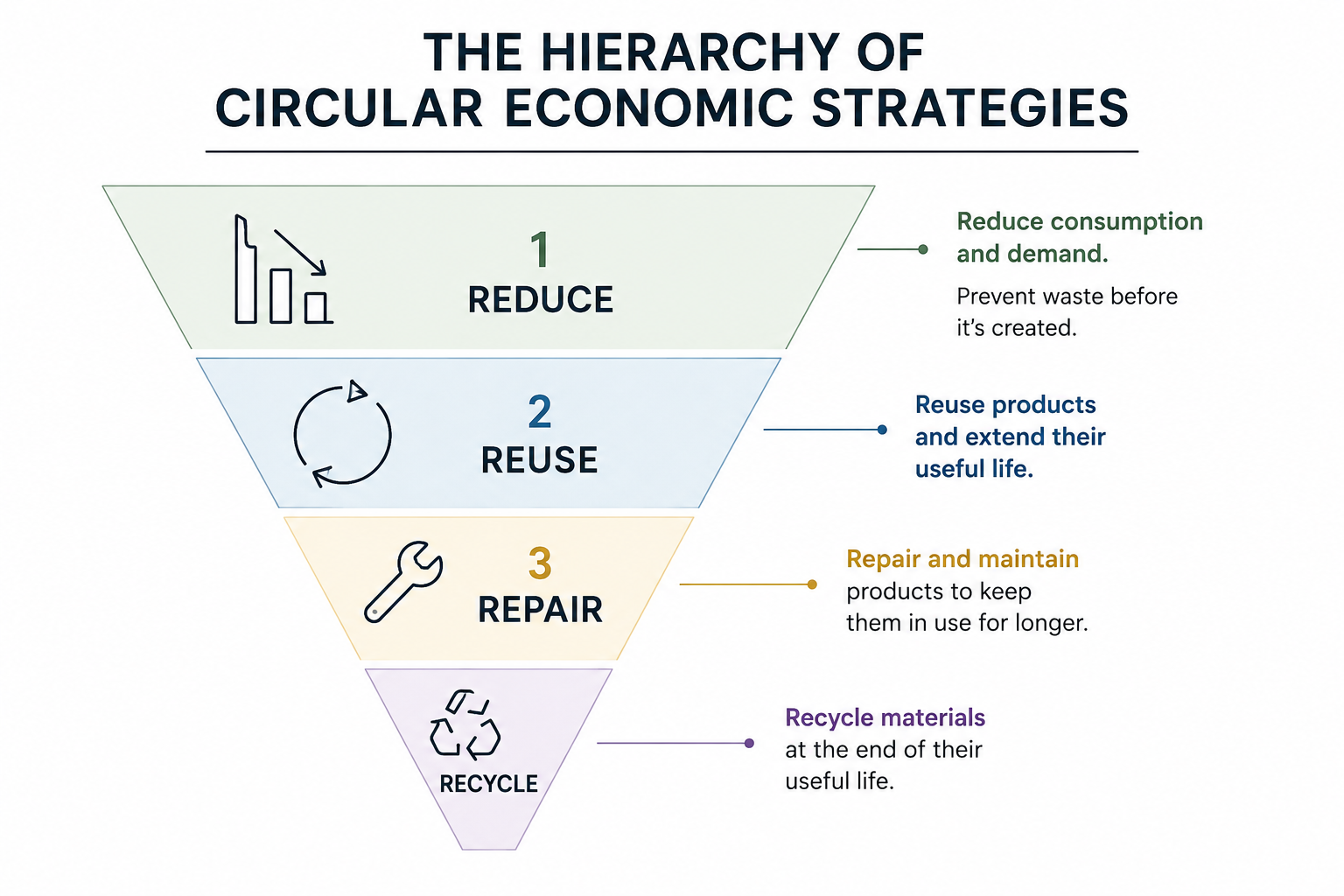
REDUCE: Don't make what isn't needed
One of the most direct ways to reduce textile waste is to avoid unnecessary production in the first place.
As a local manufacturer, much of our production is driven by actual customer orders, known requirements and forecasting rather than speculative production across every possible size and style.
Dead stock is already waste in the making. Fibre has been produced, fabric manufactured and dyed, trims added and a garment cut, sewn, packaged and transported before anyone has received any value from it.
Our manufacturing model allows us to develop a garment, trial it with the people who will actually wear it, make changes where required and then manufacture according to genuine demand.
Local manufacturing also gives us flexibility when requirements change. If branding, specifications or designs change, we are less likely to be left with large quantities of finished garments that can no longer be used.
For us, waste reduction starts before the cutting table.
MAKE IT LAST: Durability is part of sustainability
A garment shouldn't be considered sustainable simply because of what happens when it is eventually discarded. What happens during all the months and years before that point matters too.
Every garment unnecessarily replaced requires another garment to take its place: more fibre, fabric manufacture, dyeing and finishing, trims, cutting, sewing, packaging and transport.
That is why durability sits at the centre of our sustainability work.
But we don't assume durability from a brand name, price tag, fabric weight or fibre composition. Research by WRAP into clothing durability has demonstrated why those shortcuts can be misleading. Different aspects of textile construction, finishing and use all influence how a garment performs over time.
So we test.
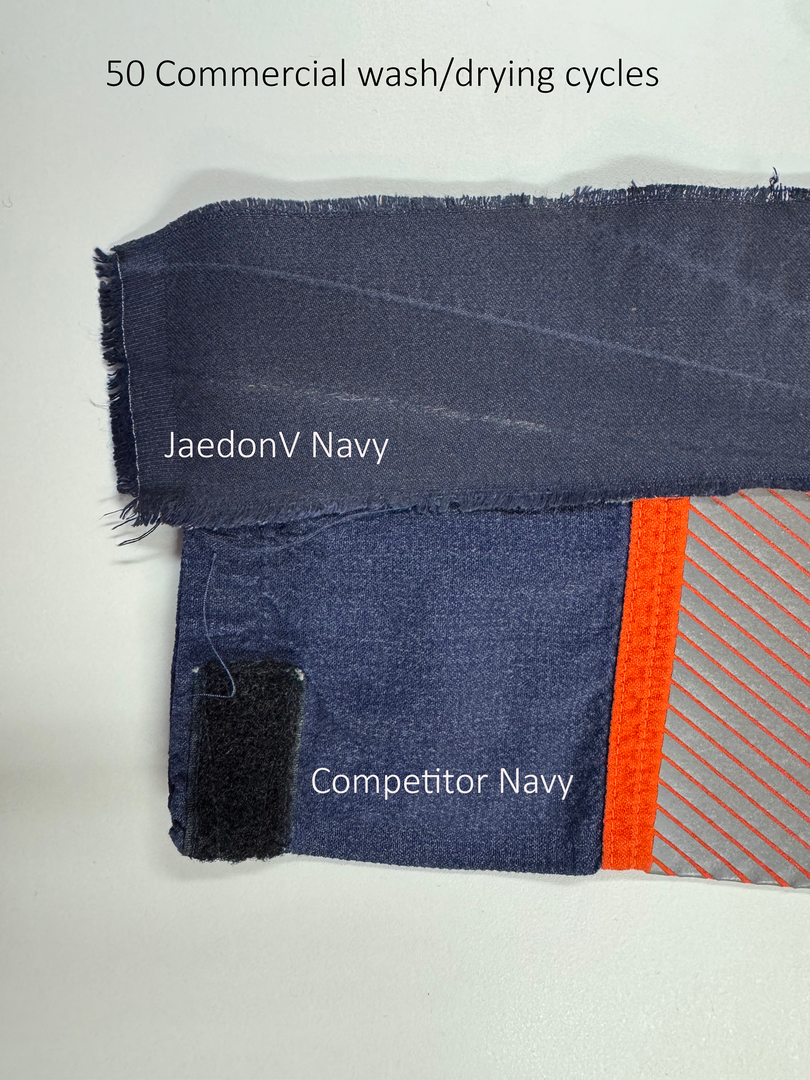
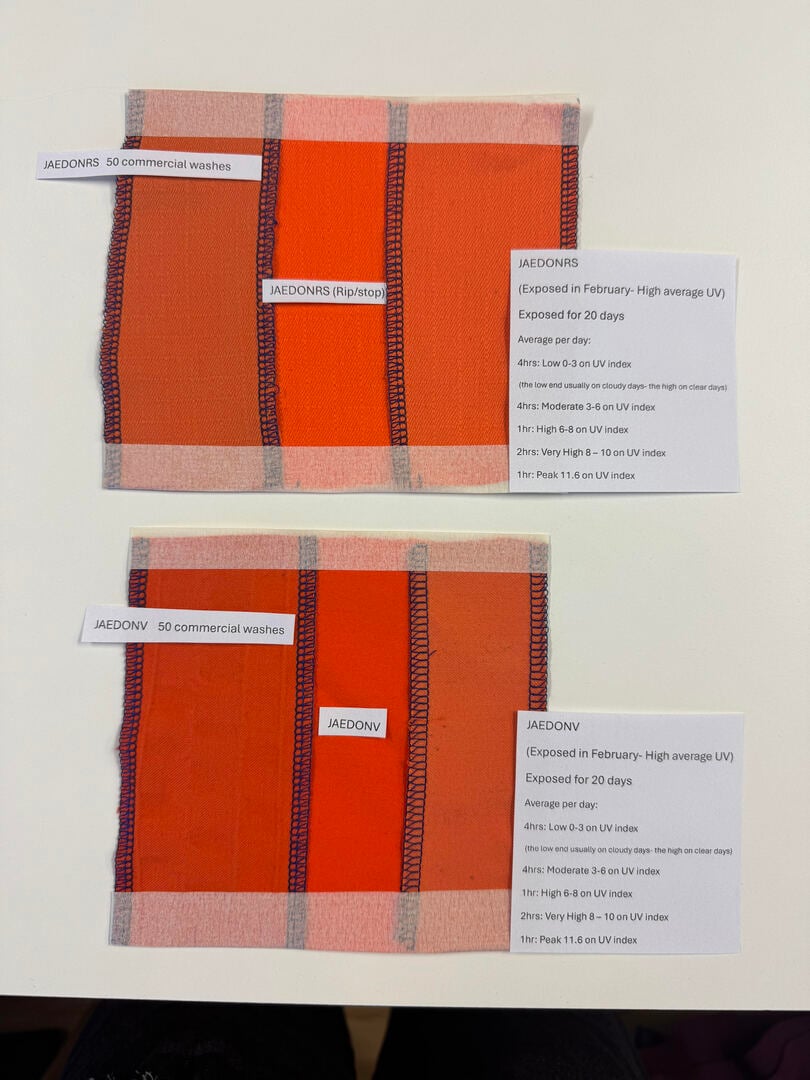
Our fabric evaluation includes repeated laundering and UV exposure because we want 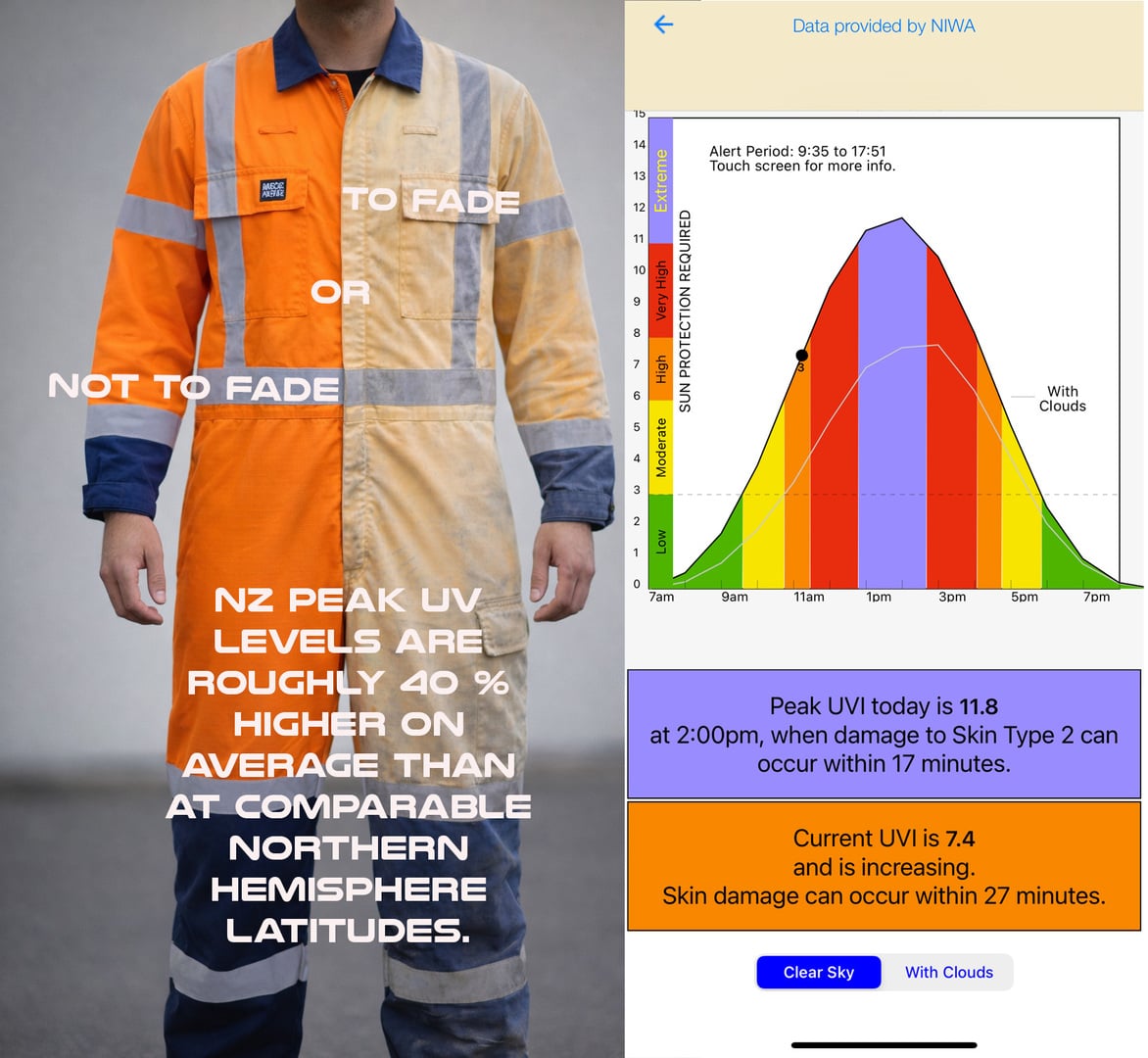 to understand how materials behave under stress, including how they retain their performance, colour and appearance.
We also listen to what happens in the field. Customer feedback, repair records and recurring failures can tell us things a new fabric datasheet cannot.
Sometimes the answer isn't a heavier garment. Advances in fibre, yarn and fabric construction can allow lighter materials to perform extremely well, while reinforcement can be concentrated in high-wear areas such as knees, elbows, pockets and crotches.
The question isn't simply “How heavy is it?”
It is “How well does it perform, and for how long?”
Price isn't evidence of durability either
Purchase price tells us what a garment costs to buy. It doesn't necessarily tell us how well it was made or how long it will remain useful.
A lower-priced garment that requires frequent replacement can ultimately cost an organisation more than one that remains serviceable considerably longer. Equally, an expensive garment isn't automatically durable simply because it costs more.
For procurement, we think the better question is:
What are we getting for that cost, and how long will it remain in service?
We have begun analysing several years of garment issue and replacement records provided by a large electrical infrastructure customer we have supplied for more than 20 years. The initial findings are already revealing differences in replacement patterns between occupations, with overhead line technicians and underground electrical workers showing different rates of garment replacement.
The research is also raising questions about fabric selection, garment design and where reinforcement may improve durability. Importantly, an issue date doesn't necessarily tell us when a garment wore out. We still need to distinguish genuine wear and failure from replacements driven by entitlements, changes in fit, loss or other operational reasons.
By combining this data with our repair records and fabric testing, we hope to build a clearer picture of actual garment service life and identify where improvements can be made.
Ultimately, we want procurement conversations to move beyond unit price towards whole-of-life value and the cost of each year of useful service.
REPAIR: Repair, learn and improve
Because we develop, manufacture and repair garments ourselves, we have an opportunity that is easy to overlook: we get to see what happens after our products leave the factory.
When something comes back, we can ask why.
Was the fabric sufficiently durable? Did a zip fail before the rest of the garment? Is the same area repeatedly wearing through? Could the seam be constructed differently? Would reinforcement help? Could another fabric perform better?
That creates a feedback loop between the people wearing our clothing and the people making it:
Wear. Repair. Record. Learn. Improve.
The objective isn't simply to become good at repairing garments. The better outcome is to learn enough from repairs that some of the same failures no longer occur.
Our work with Carters is one example. Nine nail-gun vests came through our repair system during May and June 2026 with fabric damage. All nine were repaired, but the recurring damage also supported concerns our factory had already raised about the fabric being used.
We recommended returning to a more durable option and Carters agreed. We can now watch what happens and see whether the improved garment comes back less often.
It is a small example, but it captures what we want this programme to do:
Performance creates evidence. Evidence informs product development. Better product development should increase useful life.
A failed component doesn't have to mean a failed garment
Our historical repair register contains 252 recorded repair jobs representing hundreds of garments across multiple industries.
Those records include a Police overall manufactured in November 2009 that returned to Jaedon for repair in April 2024. The problem was the zip. We replaced it and the garment was able to return to service. Other records include garments returning for repair more than 9, 10 and 11 years after manufacture.
We don't use those examples to claim a typical Jaedon garment lasts 10 or 14 years. Establishing typical service life requires much broader data.
They demonstrate something much simpler:
Age doesn't necessarily make a garment waste, and a failed component doesn't necessarily mean a failed garment.
Research also supports the value of extending clothing life through repair. A 2026 study published in Sustainable Production and Consumption modelled repair versus replacement across 18 scenarios and found repair produced 46–52% lower lifecycle climate emissions in the scenarios studied, including transport associated with repair. The exact benefit will vary by garment and circumstances, but it reinforces why we treat repair as an important inner loop of circularity rather than jumping immediately to replacement or recycling.
There is an important limit to this. PPE still has to protect the person wearing it.
When durability raises another question
We recently heard from a long-standing customer whose flame-resistant protective overalls are still being worn after what they estimate to be 15–20 years of service.
Naturally, we're delighted. These garments have been through years of demanding work and frequent laundering, yet their construction has held up remarkably well. The occasional zip has given way, but the garments themselves have continued to serve their purpose.
However, the customer raised a very good question: just because the garments are still wearable, does that mean they are still providing the protection they were designed for?
It's a question we're just as interested in answering.
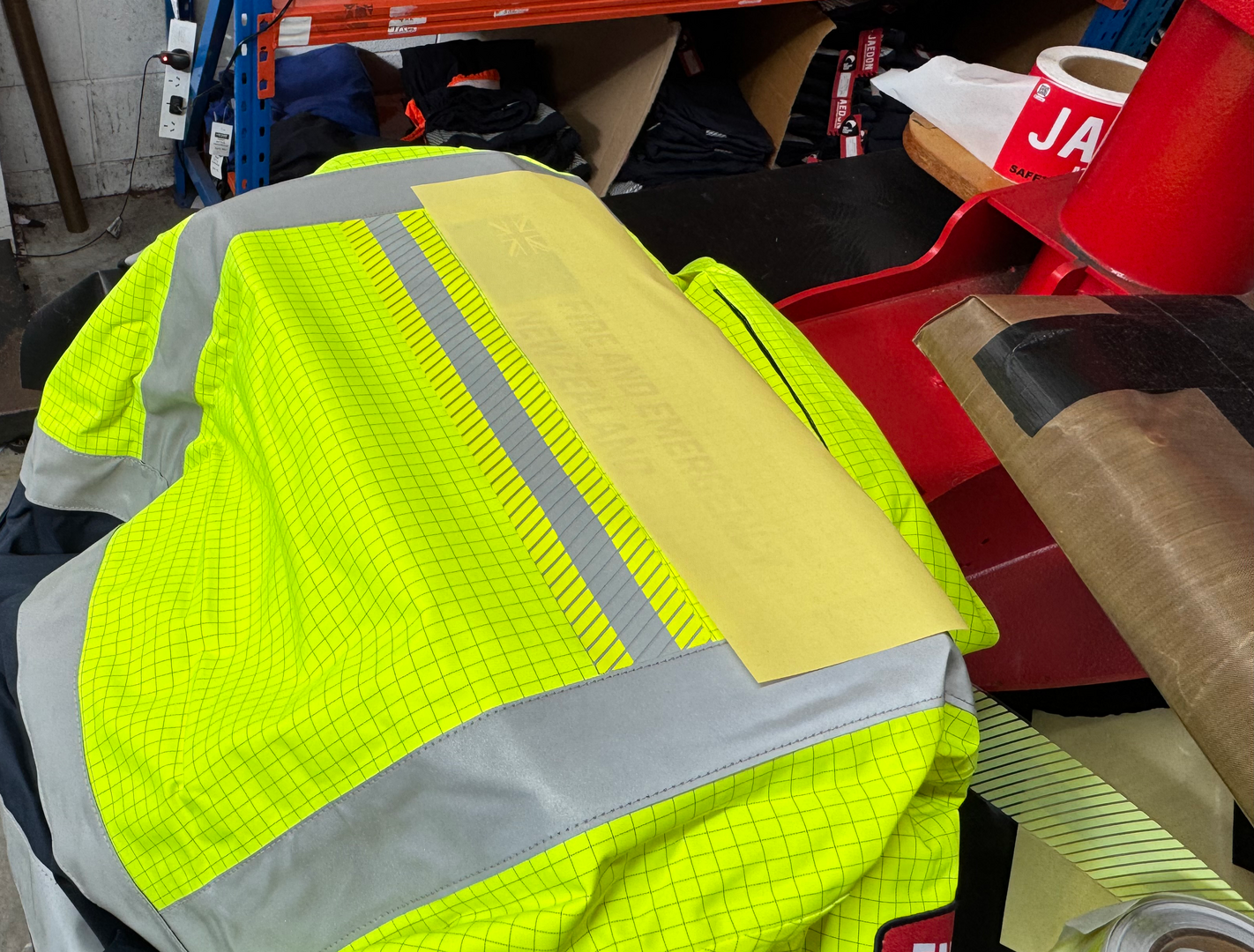
We're now working with the customer to examine some of their oldest garments, investigate whether the original flame-resistant properties have been retained and better understand what an appropriate service life should look like.
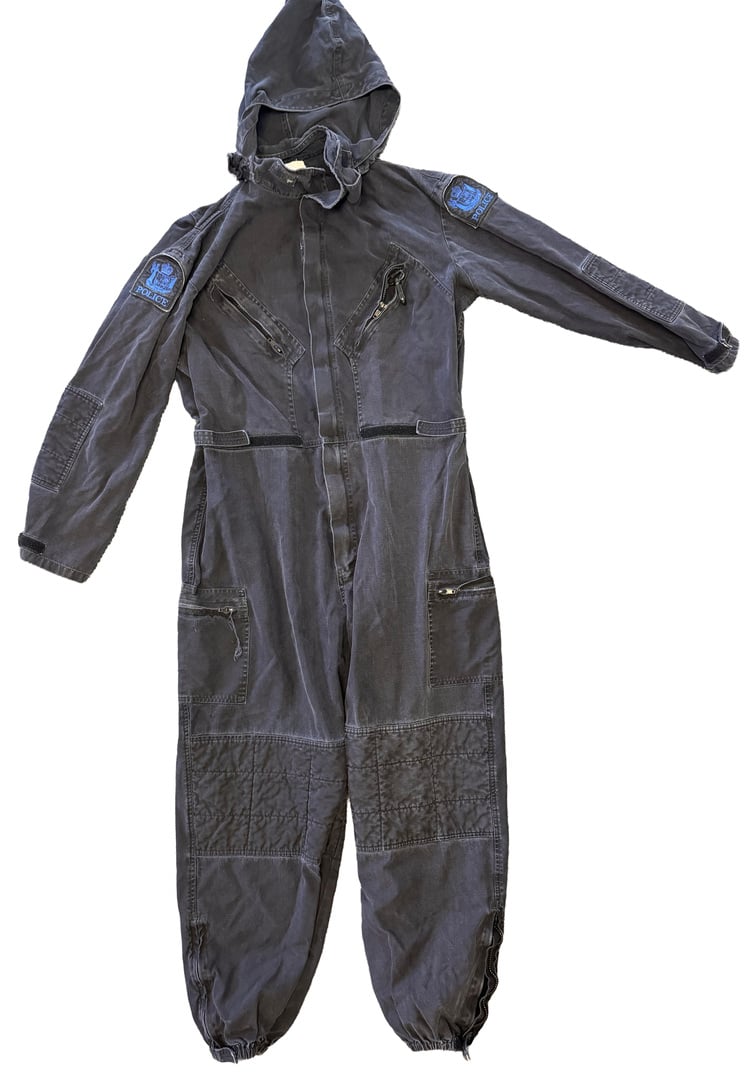
The 20 year old overalls supplied for FR testing.
We don't know what the testing will reveal yet. Perhaps the protective performance has held up remarkably well. Perhaps we'll discover that the garments should have been retired much earlier.
Fabric suppliers sometimes describe flame-resistant treatments as lasting for the life of the garment. But what happens when that garment remains wearable for 20 years? Was such an extraordinary service life ever anticipated, and what does it mean for the protective performance we expect it to retain?
The answers may lead us towards different fabric technologies, improved maintenance guidance or clearer replacement recommendations. Whatever we discover, it will help us make better-informed decisions about the materials we recommend and the garments we manufacture. (We will update our page when we have conclusive results and answers to this investigation)
We want our garments to last as long as possible, but never longer than they can safely do their job.
That's why durability research matters to us. Making something last is only an achievement if it continues to do what it was made to do.
A garment has to be worth repairing
Repair works best when the original garment was made well enough to have value worth preserving.
A well-made garment may lose a zip, tear a pocket or wear through at a predictable high-stress point while most of the garment remains perfectly serviceable. Repairing that failure preserves the fabric, components, manufacturing and value already contained in it.
When deterioration is widespread across the fabric, seams and components, repairing one failure may simply leave the next weak point waiting to fail.
That is another reason durability matters: making something worth repairing gives us more opportunity to extend its useful life.
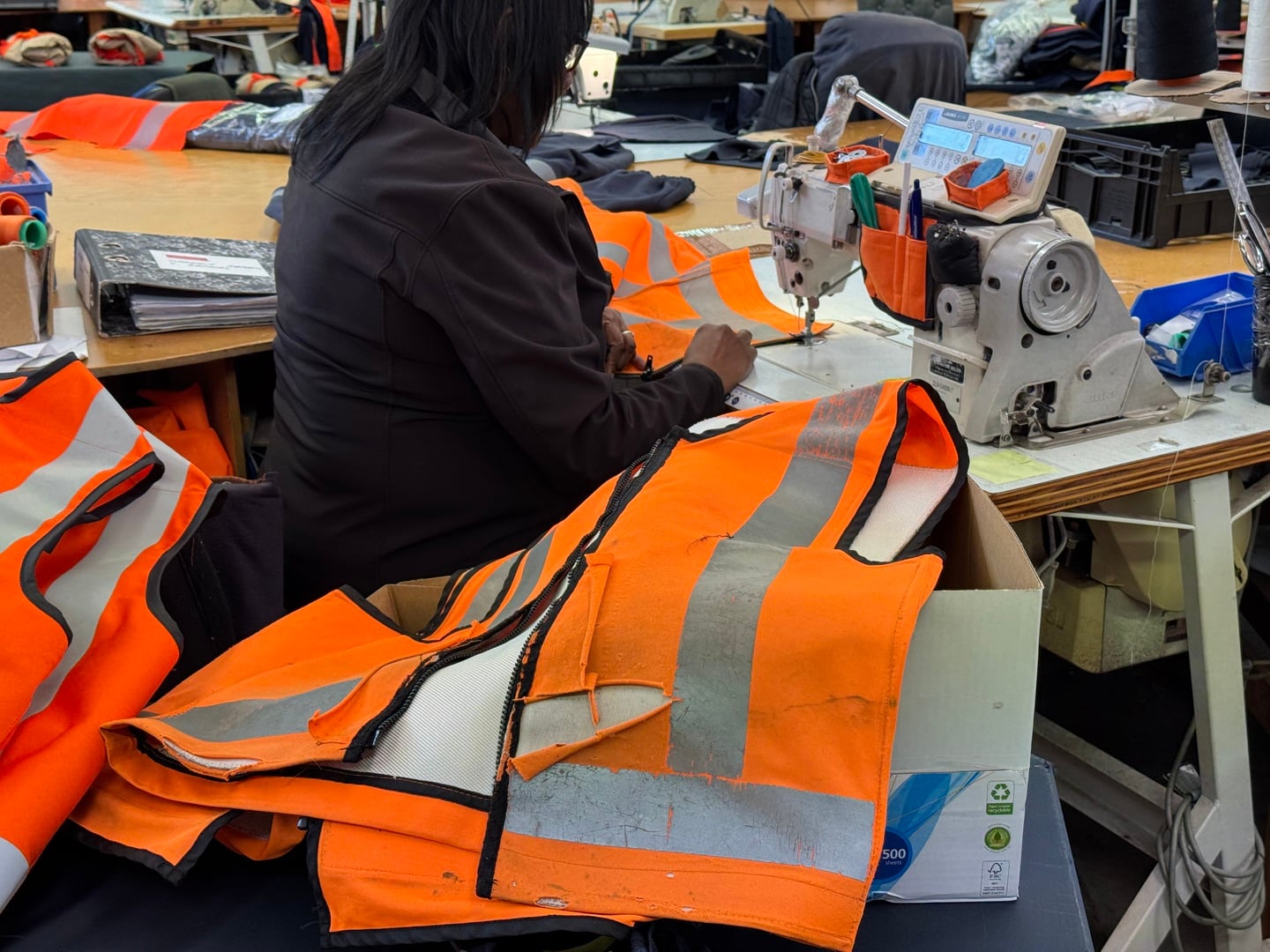
As a manufacturer, we have access to appropriate fabrics, threads, zips and components, together with knowledge of how our garments were originally constructed. That allows us to undertake repairs that may not be appropriate for a conventional alteration service.
But we will not extend the life of PPE at the expense of protection.
Sustainability and safety are not competing objectives.
REUSE: Preserve the value that's already there
Garments can become obsolete for reasons that have nothing to do with their physical condition.
Branding changes. Contracts change. People change roles. Bodies change. Uniform specifications change.
Where practical, our manufacturing capability gives us another option between use and disposal: alter the garment, replace a component, remove or cover obsolete branding, or repurpose it.
We recently rebranded 80 wet-weather jackets, including garments manufactured in 2015 that remained serviceable. Some had effectively been rebranded for a third time.
That experience has also changed how we think about future product development: where practical, branding likely to change should be designed so it can be removed or replaced.
A change of logo shouldn't automatically mean the end of a serviceable garment.
None of this happens through the manufacturer alone.
Some of our best examples exist because customers chose to repair rather than automatically replace; alter rather than discard; trial changes; provide feedback; and allow us to examine their historical data.
Sustainable workwear is a partnership between the people who design and make it, the organisations that procure it and the people who actually wear it.
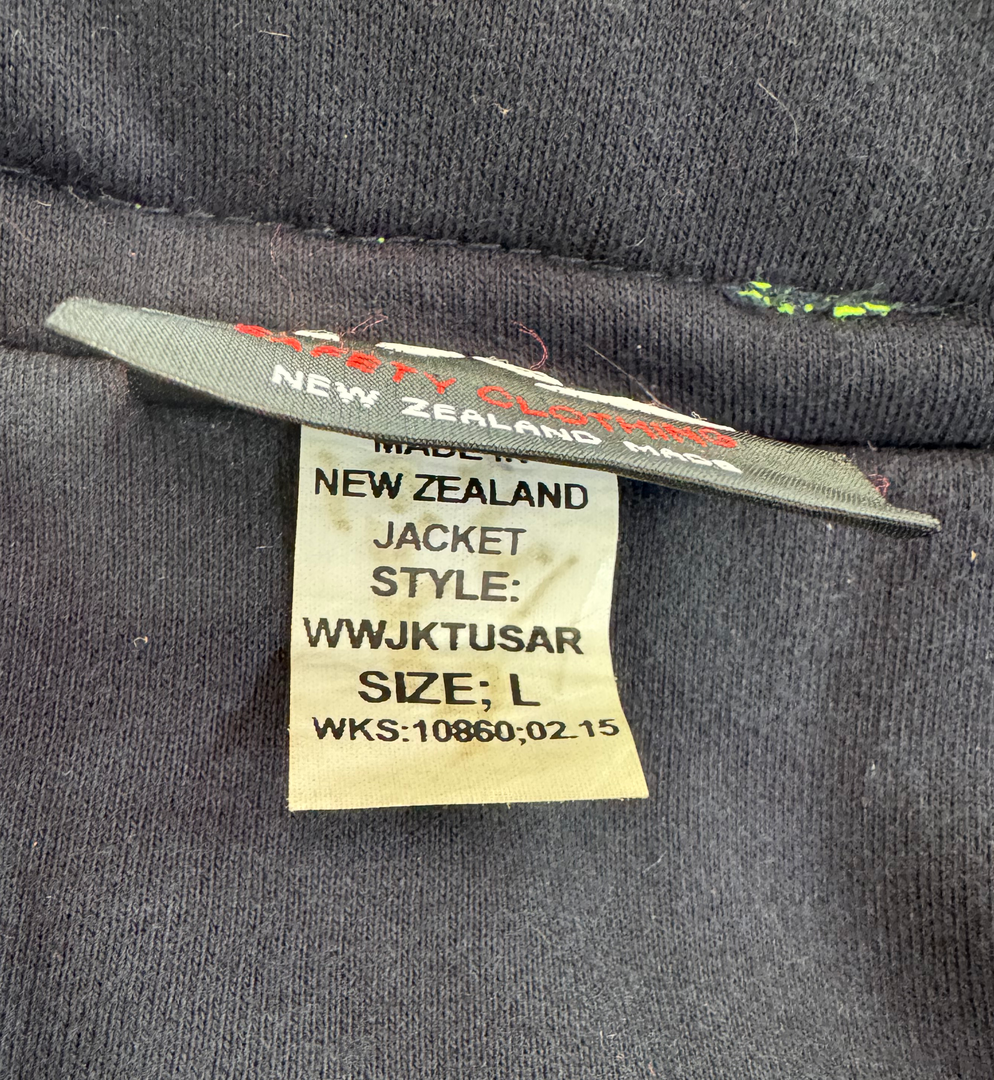
A works order number is printed on the label of every garment we make; this allows us to trace the production batch and date of manufacture.
FIT: Making clothing that properly fits is part of making clothing that lasts
Durability isn't only about fabric and construction.
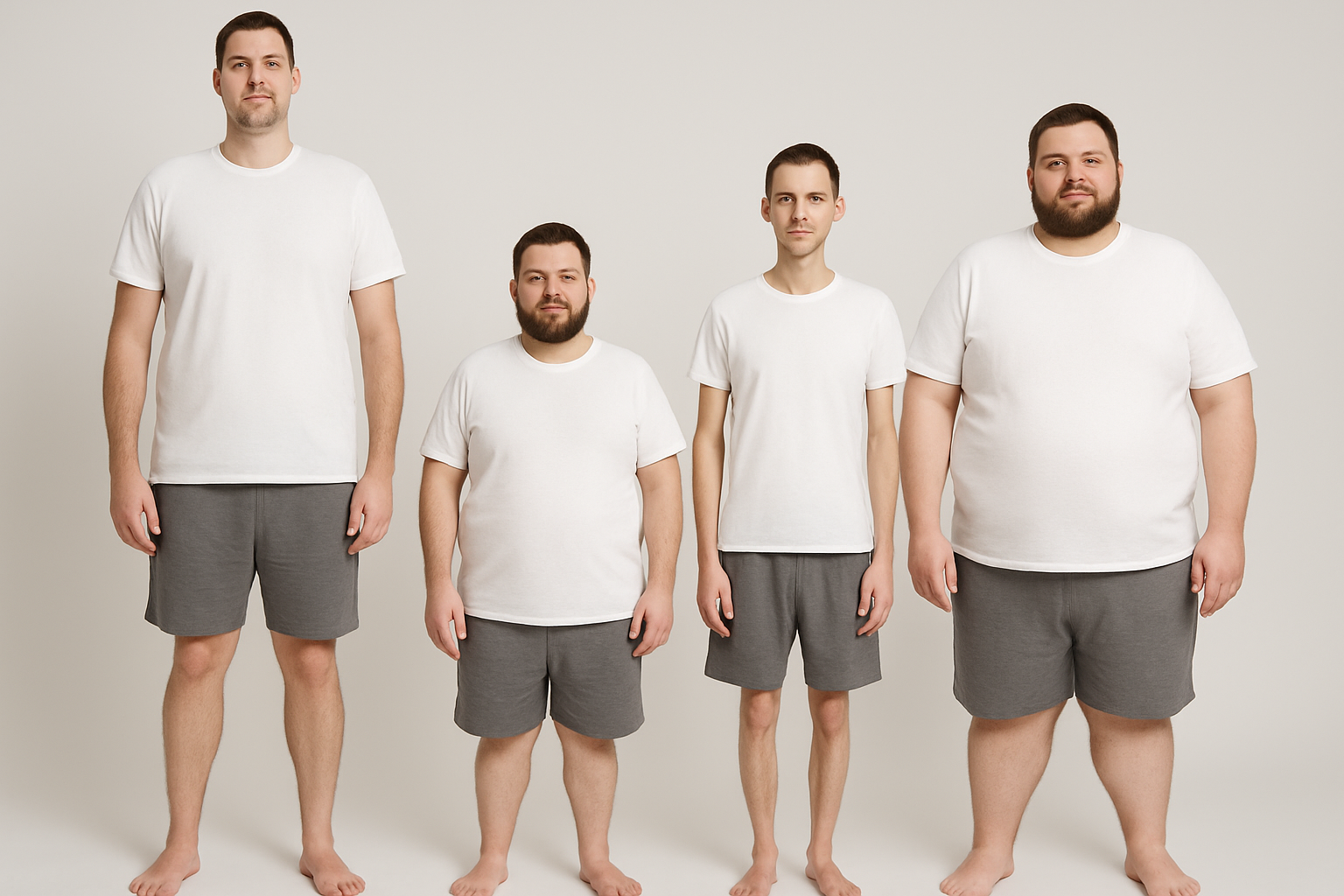
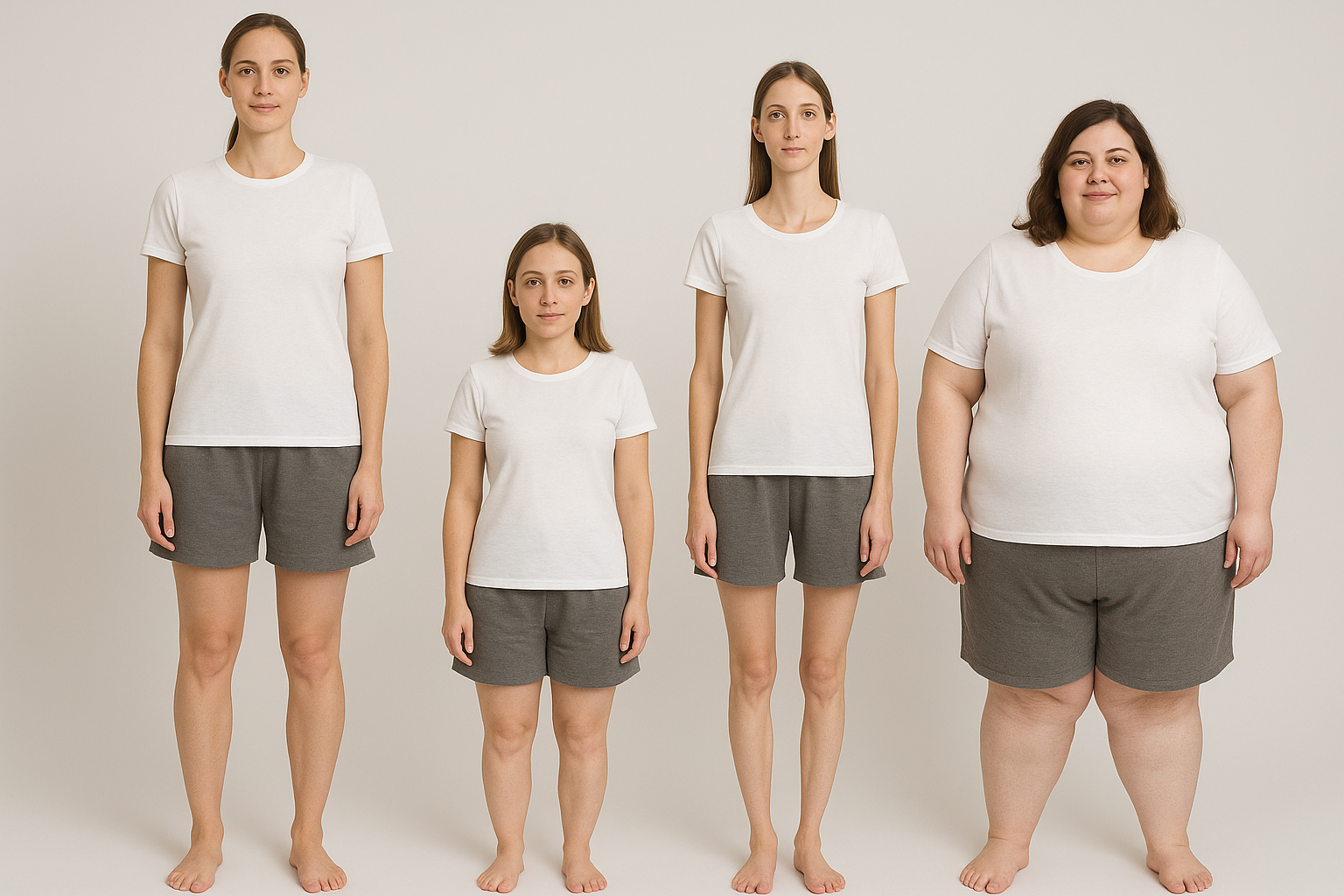
Workwear has to move with someone who may spend the day climbing, reaching, crouching, bending and kneeling. Poor fit can place unnecessary strain on fabric, seams and components while also making a garment uncomfortable or impractical.
Bodies also don't conveniently come in a standard range of proportions.
Our local patternmaking and manufacturing capability allows us to alter garments, adapt patterns and, where required, develop individual blocks rather than repeatedly supplying clothing that doesn't properly fit.
A sample of historical records from one of our large electrical utility customers identified at least 11 individual employees for whom specific fit interventions were recorded over a period of a decade. These ranged from alterations to standard garments through to adapted patterns and individually developed blocks. The same records even include garments altered following weight loss rather than automatically being discarded and replaced.
There is a sustainability benefit to getting fit right, but there is something more fundamental at stake too.
People should not have to fit a clothing manufacturer's size chart in order to fit into a workplace.
They should be able to be seen, valued and included for the contribution they can make.
RECOVER & RECYCLE: Understand what happens next
Recycling is an important part of our waste management programme, but our first priority is to make better use of the materials we already have. Wherever practical, manufacturing offcuts are used to produce smaller, useful products, reducing the amount of material requiring recycling in the first place.
For the waste that remains, we want to understand what actually happens to it. Sending material away in a recycling bag doesn't necessarily mean it has been recycled. Different fibres, mixed materials and manufacturing waste require different processes, and some materials have no viable recovery pathway at present.
There is also a difference between recovering material for insulation, filling or other useful applications and recycling textile fibres back into equivalent textiles. Both may have value, but understanding the distinction helps us make better decisions and report our outcomes accurately.
Measuring our production waste and environmental impact
Since 2026, we have been separating and weighing production textile waste, alongside our existing cardboard and paper recycling and newer soft plastics recycling programme.
Our initial figures indicate that we are diverting approximately 100 kg of textile waste and 24 kg of soft plastics from landfill each month. At these rates, we project an annual diversion of approximately 1.49 tonnes, excluding the cardboard and paper we have been recycling for many years.
Our textile recycling partner, AFTER, has provided estimated environmental impact figures for the textile waste collected. Based on their calculations, and assuming our current monthly recycling volumes continue, the projected annual environmental benefits of our textile recycling programme are approximately:
28,800 kg of CO₂e emissions prevented
219,000 kWh of energy saved
3,573,504 litres of water saved
1,200 kg of textile waste diverted from landfill
These figures are annualised projections based on AFTER's estimated environmental impacts, rather than verified annual outcomes. They relate specifically to textile recycling and do not include any additional benefits from recycling soft plastics, cardboard or paper. We are also seeking to understand the methodology behind these estimates so that our environmental reporting remains transparent and defensible.
Production volumes and the materials we work with vary throughout the year, so actual recycling quantities and environmental impacts will fluctuate. We are collecting data over a full 12-month period, after which we intend to report actual waste quantities, landfill diversion rates and updated environmental impact estimates.
Diversion is good. Creating less waste is better.
Measuring what we divert from landfill is a useful starting point, but it doesn't tell us whether we're becoming more efficient with the materials we use.
A factory producing more garments will generally generate more cutting waste, so recycling volumes alone cannot tell us whether our waste reduction efforts are working.
As our data develops, we want to measure waste relative to production and investigate where improvements can be made through marker efficiency, garment design, fabric utilisation and better use of remnants. We also want to understand whether particular products or materials generate disproportionately high levels of waste.
Ultimately, success won't simply mean recycling more. It will mean generating less waste for the amount of clothing we produce, while finding productive uses for as much of the remaining material as possible.
Sending waste somewhere better than landfill matters; not creating it in the first place matters more.
MEASURE: Evidence rather than assumptions
We don't currently have a full lifecycle assessment for every garment, fabric, trim and customer-specific product we manufacture.
Our response isn't to substitute assumptions for evidence or make claims our data cannot support.
Instead, we are building measurement around the things we can see, influence and progressively improve: how much we manufacture; how much waste we create; how long garments remain useful; what fails; what can be repaired; what we learn; what we improve; what can be reused; and what happens to what remains.
Local manufacturing is important to this approach, not because something automatically becomes sustainable simply because it is made in New Zealand.
It matters because manufacturing gives us visibility and agency.
We can see the waste on the cutting table. We can inspect the garment that comes back. We can change a pattern, reinforce a wear point, replace a component, alter an existing garment and feed what we learn directly back into production.
Our sustainability programme is still developing, but it isn't starting from zero.
Repair has been happening at Jaedon for years. Made-to-measure garments and alterations have been happening for years. Manufacturing to customer demand is inherent in how our factory operates. Garments have been reused and repurposed, and our factory has been learning from failures and changing products in response.
What we're changing now is how systematically we measure, document and report it.
Our approach
REDUCE unnecessary production and waste.
FIT the garment to the person and the job.
MAKE it to last and TEST rather than assume.
REPAIR where it can be safely repaired.
RECORD what fails and LEARN from it so we can IMPROVE the next garment.
REUSE and repurpose what still has value.
RECOVER and RECYCLE what remains, while understanding what actually happens to it.
Above all, MEASURE the results so we can keep getting better.
Buy less. Wear longer. Repair first. Reuse where possible. Recover what remains. Measure what actually happens.
Read about our ethics and sourcing policies here
Durable = Sustainable
“Buy less, choose well, make it last. Quality rather than quantity: That is true sustainability.”
-Vivienne Westwood
The most sustainable garment isn't necessarily the one with the most environmental claims attached to it.
Sometimes it's simply the one you don't have to replace.
That's why durability has become an important part of how we think about sustainability at Jaedon. We're looking beyond what a garment is made from and asking a harder question: how long does it actually remain useful?
Recently, one of our long term customers helped us start answering that question with evidence. We've supplied their workforce for more than 20 years, which means there is something particularly valuable sitting behind that relationship: history.
We were able to look at several years of garment issue data across different occupations and garment types, alongside our own repair records and what we've learned from garments that have come back through our hands.
We originally went looking for a lifespan.
What we found was much more interesting.
Durability isn't as simple as putting a number of years against a garment. Different occupations wear garments differently. Pants and jackets don't necessarily last at the same rate. Lightweight fabrics bring benefits in heat and comfort, but those benefits need to be balanced against abrasion and wear. A garment may still be physically sound but no longer meet the visibility requirements of the job. Sometimes a recurring failure points to a construction detail that could simply be designed better.
That's the information we're interested in.
Because once we understand why something is being replaced, we can start doing something about it.
We can reconsider fabric weights, reinforce high wear areas, change construction, repair rather than replace, adjust patterns and trial different materials. Then we can keep watching to see whether those changes actually work.
Wear. Repair. Record. Learn. Improve.
That's the cycle we're building.
We don't have all the answers yet, and that's important too. Rather than making broad claims about how long our garments last, we want to build the evidence properly: what was issued, how long it remained in service, why it was replaced, what failed, what could be repaired and what we could design differently next time.
Because making a garment recyclable at the end of its life matters.
Making it worth keeping in use for longer matters first.
Want to see what we're learning?
Read our durability research → Durability Project